
Managing teenagers’ data use onboard shouldn’t mean guilt trips or arbitrary limits — but there’s a particular kind of advice online that treats a teenager wanting their phone on holiday as something to be managed, minimised, or fixed, as if staying in touch with friends is a bad habit rather than a genuine need. I don’t buy that. Every teenager’s different: for some, checking in with their friend group is a small, occasional thing; for others, it’s really important, so going quiet on them for a week is more than a minor inconvenience. Neither is wrong. It’s their holiday too, and there’s no “correct” amount of phone time to aim for — just whatever actually works for your family.
This post contains affiliate links for GigSky and Maya.
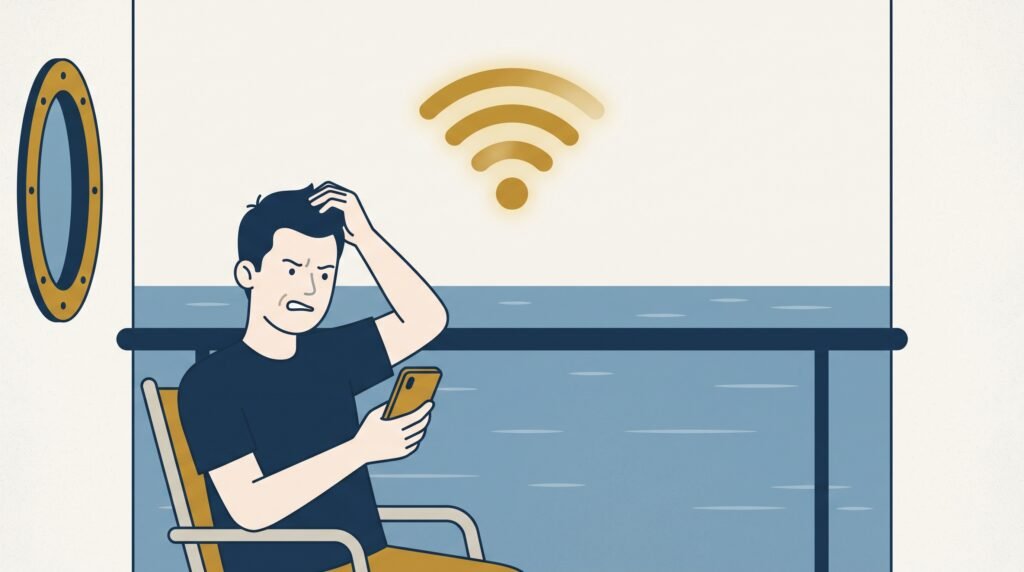
Table of Contents
Managing Teenagers’ Data Use Onboard: What “Enough” Actually Looks Like
So this isn’t a post about limiting your teenager’s data — it’s about matching what you buy (or don’t buy) to how much they genuinely need, without guessing or overpaying either way.
What Actually Worked For Us
For my daughter, the honest answer was: not much. Her main thing was keeping her Snapchat streaks going — as long as she got about an hour on her phone a day, she was completely happy, and the rest of the time she barely thought about it. That meant sharing off my hotspot (covered properly in Can the Whole Family Share One eSIM?) was genuinely enough — she never came close to needing her own connection. Worth saying clearly: that’s been true so far, this trip and the ones before it. I’ve no idea if it’ll still be true next year, and I’m not pretending it will be — just that it’s worked for us up to now.

The Three Real Options
Sharing off a parent’s hotspot. Fine for occasional, light use — checking a few apps, replying to messages, not constant scrolling or streaming. If your teenager’s needs look like my daughter’s, this is genuinely enough and costs nothing extra.
A restricted-but-unlimited plan. GigSky sells an “Essentials” tier — unlimited data, but locked to a specific list of apps (WhatsApp, iMessage, Maps, email, a handful of others) rather than general browsing. It’s around £33 a week. I haven’t actually used this one myself — our situation just hasn’t called for it — but it looks like a genuinely sensible middle ground if your teenager needs to be reachable constantly but doesn’t need full internet access: no data anxiety, no general scrolling either.
Their own full eSIM. If they’re a heavier all-round user — streaming, browsing, the works — sharing or a restricted tier won’t cut it, and it’s honestly simpler to just size them their own plan properly, on GigSky or Maya depending on how they use it. How Much Data Do You Actually Need? covers working that out.
It Might Not Stay This Simple
I’d also just say: don’t treat whatever works this trip as fixed. What was enough for my daughter this time might not be enough next time — friendship groups change, apps change, what feels urgent to a fifteen-year-old shifts fast. Worth just checking in with them before each trip rather than assuming last year’s setup still fits.
Our Verdict
Start with sharing — it’s free and it’s enough for a lot of teenagers. Only step up to a restricted plan or their own full eSIM if sharing genuinely isn’t cutting it, rather than assuming you need to buy more than you do. And don’t feel guilty either way — matching the plan to your actual teenager, not to what you think you “should” be doing, is the whole point.
Last updated August 2026. This post contains affiliate links for GigSky and Maya — I get a small commission if you buy through them, at no extra cost to you. More on how that works →
Still deciding which eSIM?
Answer a few questions, get a personalised recommendation in under a minute.